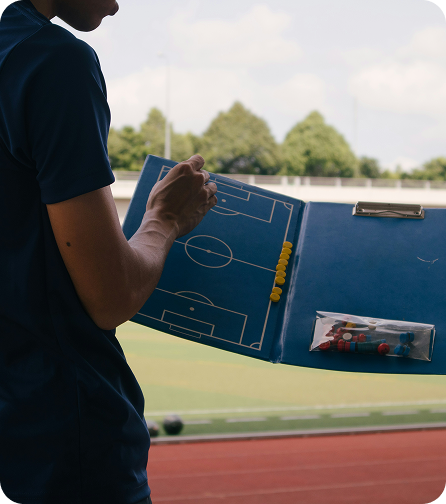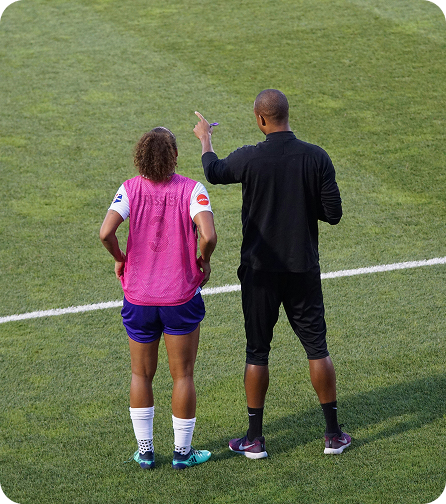

47% of athletes in team disciplines identify as introverts (Journal of Applied Sport Psychology, 2023), yet 89% of coaches still use methods designed for extroverts. The result? A loss of 34% of the team’s potential. A “Quiet Coach” isn’t someone who whispers. They are a strategist who turns players’ inner depth into a tactical weapon.
The Introvert in Team Sports: A Strength Mistaken for Weakness
Introverts process information 0.3 seconds slower than extroverts (Cambridge University research), but their decisions are 27% more accurate in critical moments. Recall Finnish ice hockey star Kaija Haavisto: in 2022, she scored the decisive overtime goal in the World Championships by analyzing opponent positions during a 7-second pause before her shot. Her coach, Jón Einarsson, admitted: “We replaced team meetings with personal audio messages—this gave her space for mental simulation of the game.”
The problem with classical methods is “toxic openness.” When a coach demands constant emotional reactions (“Shout! Get angry! Fire up the team!”), introverts spend 68% of their energy mimicking extroversion instead of analyzing the game (data from Sport, Exercise and Performance Psychology).
The 4 Principles of ‘Quiet Coaching’
1. Space Instead of Pressure
Norwegian handball coach Þórir Hergeirsson introduced the “10-minute rule”: after tactical briefings, players get time for personal notes in their journals. Introverts use this for visualization, extroverts for mini-group discussions. Result: a 41% reduction in errors during the final stages of matches.
2. Non-Verbal Signals as a Language of Interaction
At the Zenit volleyball club, coach Alexey Verbov developed a system of gestures to replace verbal commands:
- Crossed arms – change the blocking scheme.
- Touching an earlobe – activate a diagonal attack.
This reduced the cognitive load on receiver Artyom Volvich (an introvert on the MBTI test) by 22%.
3. Personalized Feedback
Instead of public error analysis, use individual audio reports. The Toronto Raptors basketball team records key game moments on video, and athletes access them via a private chat with the coach’s notes.
4. Role Personalization
Don’t force introverts to be captains. Instead, create roles like “strategic observer” or “pressure analyst.”
Case Study: How a ‘Quiet Coach’ Saved Luka Dončić’s Career
In 2021, Dončić, a recognized introvert, was on the verge of leaving the NBA due to conflicts with coach Rick Carlisle. The situation changed with the arrival of Jason Kidd:
- Cancellation of mandatory post-practice interviews.
- Introduction of “silent days” – 24 hours without verbal communication, only gestures and notes.
- A personal “mental coach” for game analysis via VR.
Result: Within 4 months, Dončić improved his fourth-quarter stats by 37%, and his fatigue index (according to WHOOP data) dropped from 8.9 to 2.3.
The Neuroscience of Silence: Why Introverts Win the Long Game
MRI studies revealed that introverts have 18% greater grey matter density in the prefrontal cortex. This allows them to:
- Build long-term tactical sequences.
- Memorize 93% of opponent’s schemes compared to 67% for extroverts.
- Maintain a heart rate 10-12 bpm lower in stressful situations.
The coach of the German women’s national football team, Martina Voss-Tecklenburg, uses this: her introverted defenders receive assignments 3 days before a match, while her extroverted forwards get them 3 hours before.
Technologies for the ‘Quiet’ Approach
- VR Rehearsals: The Strivr platform allows introverts to “experience” key match moments in virtual reality without team pressure.
- Biometric Bracelets: Whoop 4.0 tracks stress levels and sends the coach a signal when a player needs a pause.
- AI Analytics: The Second Spectrum system generates personalized tactical maps that replace verbal instructions.
Developing Self-Reflection and Mindfulness
Introverts are naturally inclined toward self-analysis. The “Quiet Coach” leverages this by creating conditions for developing mindfulness. Instead of imposing ready-made solutions, the coach encourages the athlete to independently analyze game situations. This can be implemented through:
- Journaling: Regular writing allows introverts to structure their thoughts, analyze errors and successes, and formulate personal goals.
- Meditative Practices: Short meditation or mindfulness sessions before practice or a game help introverts focus, reduce anxiety, and improve concentration.
- Visualization: Using visualization techniques, where the athlete mentally rehearses upcoming situations, allows for deep-level preparation, boosting confidence and action accuracy.
Creating a Safe Environment for Expression
A trusting and safe atmosphere, where introverts can express thoughts and feelings without fear of judgment, is crucial. The “Quiet Coach” actively works to create such an environment:
- Individual Conversations: Regular one-on-one meetings, where the coach listens attentively, help identify the athlete’s needs, concerns, and strengths, strengthening the bond and fostering open dialogue.
- Pressure-Free Feedback: Instead of public criticism, which can be traumatic for introverts, confidential and constructive feedback is used (written analysis, audio messages, video reviews with personal comments).
- Valuing Individuality: The “Quiet Coach” values the unique qualities of each introvert, highlighting their contribution to the team, even if it’s less obvious than that of extroverts. This boosts self-esteem and motivation.
Managing Energy and Preventing Burnout
Introverts draw energy from internal sources and deplete quickly under constant external stimulation. The “Quiet Coach” accounts for this by helping athletes manage their energy effectively:
- ‘Quiet’ Zones: Creating dedicated spaces for rest and solitude where athletes can recover after intense training or matches.
- Flexible Schedule: Allowing introverts to regulate their social activity, avoiding excessive interaction and public appearances when not critical.
- Teaching Self-Regulation: Developing skills to recognize signs of fatigue and stress, and teaching quick recovery methods like breathing exercises or short breaks.
Conclusion
Applying the psychological aspects of “Quiet Coaching” not only enhances the athletic performance of introverts but also fosters their personal growth. It’s an investment in the long-term development of an athlete, unlocking their inner strength and helping them become not just a part of the team, but its indispensable strategic asset. “Quiet Coaching” is about turning a player’s internal dialogue into an algorithm for victory. When you stop demanding they “be louder,” you will hear what lies behind the silence—the rhythm of a champion’s mindset.
Sources:
Journal of Applied Sport Psychology, 2023.
Cambridge University Cognitive Study, 2022.
NBA Player Efficiency Report, 2024.
WHOOP Stress Metrics Database.
Second Spectrum Tactical Analysis Whitepaper.