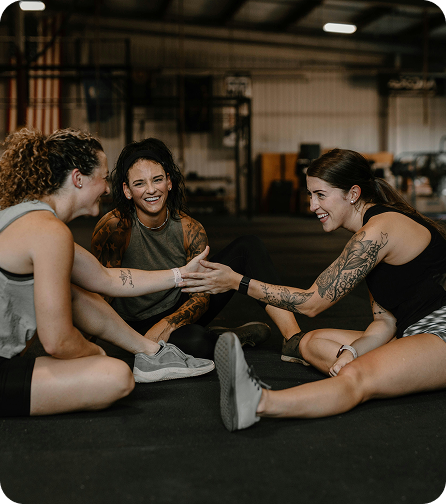

Imagine an early winter morning. It’s dark, cold, and the alarm clock insistently demands that you get up for a run. Alone, the temptation to turn it off and roll over is strong. But if several people are waiting for you in the park for a joint run, the chances of skipping the workout become much lower. This is the most obvious, but far from the only, manifestation of the magic of community in the world of fitness. The deep psychology and social dynamics of group classes or training with a partner become a powerful tool that can radically improve the efficiency, safety, and results of your efforts.
At the core of the group training phenomenon lies a powerful psychological principle—social support and accountability. When you arrange to meet someone at the gym or the stadium, you take on an unspoken obligation. Skipping a workout ceases to be a personal matter and becomes a act of letting down your comrade, creating healthy social pressure. This external motivation, especially in the early stages, serves as a critical catalyst for habit formation. Over time, discipline fueled from outside evolves into an internal need, and it is the community that helps navigate this difficult transition period. Furthermore, the group creates a unique environment for healthy competition. Seeing another person lift a slightly heavier weight, run an extra kilometer, or hold a plank for ten seconds longer, you involuntarily get an extra incentive to give your all. This competition is not for victory, but for overcoming your own limits, and it is one of the most effective drivers of progress.
From a physiological standpoint, training in a group can literally make your body work differently. Numerous studies show that in a collective, people are often able to tolerate a higher level of pain and fatigue. The brain, distracted by interaction with others and the general energy of the group, processes signals of muscle fatigue differently. This phenomenon is sometimes called the “group effect,” which allows for increased intensity and duration of load, directly leading to better results. Moreover, the community acts as a live mirror for practicing technique. Alone, it’s easy to miss errors in posture, squat, or running form that can lead to injury. A partner or trainer in a group can promptly point out inaccuracies, preventing negative consequences. Mutual spotting when working with heavy weights is another undeniable physical advantage that makes strength training not only more effective but also safer.
Perhaps the most underrated aspect is the powerful emotional and psychological support provided by the community. The path to fitness goals is rarely linear; it is accompanied by periods of plateau, motivation slumps, and frustration. During such times, the support of like-minded people who face the same difficulties becomes invaluable. The opportunity to discuss problems, get advice, or simply hear words of encouragement helps combat burnout and maintain self-belief. The group turns into a kind of interest club where fitness is not a chore but an exciting joint journey. Overcoming difficulties together during a workout fosters a strong sense of community and belonging, which, in turn, positively impacts mental health, reducing stress levels and increasing overall life satisfaction.
Finally, the community serves an invaluable educational and inspirational function. In a circle of passionate people, you constantly exchange information: you learn about new exercises, more effective methods, and interesting sporting events. Experienced comrades can recommend reliable resources, share knowledge about nutrition, or help you understand the specifics of sports equipment. This continuous informal learning significantly accelerates progress compared to independent information searching, which often leads to misinformation. Furthermore, observing the successes of others, especially those who started at your level, gives you a powerful boost of confidence in your own abilities. Others’ success becomes tangible proof that your goals are achievable and your personal potential is much broader than it seems.
Of course, individual training also has its advantages—schedule flexibility and complete focus on your own sensations. However, for most people, especially beginners, the community becomes that very missing link that turns fitness from an occasional duty into a sustainable and joyful part of life. It is a synergistic effect where shared energy, support, and ambitions multiply the results of each individual participant. So next time you think about how to boost your motivation, don’t look for a newfangled diet or a secret program. Perhaps all you need is to find someone who will be waiting for you tomorrow morning in the park for a joint run.
The Neurobiology of Unity: What Happens to the Brain in a Group
Modern science allows us to look deeper into the processes that explain the “magic” of group workouts. A study conducted at Oxford University under the guidance of Professor Emily Ansell yielded striking results. Scientists discovered that athletes training in a group release significantly more endorphins—the “happiness hormones” that act as natural painkillers and induce a sense of euphoria—compared to those who train alone. This phenomenon was named the “group synchrony effect.” When people perform physical exercises together, their brain activity synchronizes, creating a collective neurobiological state. This is not just a metaphor for “team spirit”; it is a physiological reality that makes the load subjectively less heavy and more enjoyable, which directly affects a person’s willingness to endure discomfort and, consequently, increase intensity.
The Effect of “Social Facilitation”: Why Being Watched Matters
Back in the late 19th century, psychologist Norman Triplett noticed that cyclists showed better results racing against each other than when riding alone against the clock. This phenomenon, later called “social facilitation,” lies in the fact that the presence of other people (even virtual) enhances the body’s dominant response. In practice, this means that for well-mastered exercises, the presence of “spectators” in the form of training partners spurs us on to higher results. However, there is an important nuance: for complex, new tasks, the presence of a group can, on the contrary, cause excessive anxiety. This is why progressive fitness communities foster an atmosphere of support, not harsh criticism. Such an environment allows turning the potential stress of evaluation into a positive stimulus, as the person feels that their efforts are seen and valued, without being judged for possible mistakes.
From Imitation to Mastery: The Role of Mirror Neurons
From a biological standpoint, our nervous system is initially programmed to learn through observation. Every human brain contains so-called mirror neurons, which activate not only when we perform an action ourselves, but also when we see another person performing that action. During a group workout, this mechanism works continuously. A beginner athlete, observing the correct technique of a more experienced colleague, unconsciously forms the neural connections necessary to reproduce that movement. This accelerates the learning process manifold. Essentially, the group provides a live, dynamic library of correct motor patterns, which is especially valuable in complex disciplines like CrossFit, yoga, or weightlifting, where technical nuances are critical.
Community as a Structure: Overcoming Training Plateaus
One of the most challenging problems in fitness is the “plateau” period, when progress stalls despite all efforts. Alone, this stage often leads to complete demotivation and abandonment of training. The community, however, offers structural solutions to this problem. First, a coach or more experienced group members can promptly adjust the training program, introduce new elements, or suggest changing the approach to nutrition. Second, the group dynamics itself prevents “slacking off.” While a lone athlete may subconsciously start to take it easy, reducing working weights or intensity, the group maintains a set pace and level of load. Collective responsibility prevents one from quietly retreating from the plan, literally “pushing” each participant through the period of stagnation towards new personal records.
The Digital Tribe: Virtual Communities and Fitness Trackers
In the 21st century, the concept of “community” has extended far beyond the gym walls. Virtual fitness communities in apps like Strava, Garmin Connect, or MyFitnessPal perform many of the same functions as real-life groups. They create a space for social comparison, support, and recognition. When you share your running mileage or achievement, and dozens of friends “like” and comment, it activates the same reward systems in the brain as real-life approval. Joint challenges, leaderboards, and the ability to follow friends’ activities turn routine into an engaging game. A study published in the “Journal of Medical Internet Research” showed that users actively engaged in online fitness communities demonstrated a 27% higher adherence to regular exercise compared to those who used trackers in solo mode. This proves that even a digital “tribe” possesses powerful strength for forming a sustainable habit.
Thus, the decision to train in company is not merely a matter of personal preference, but a strategically sound choice supported by data from neuroscience, psychology, and sociology. The community acts as a multifaceted catalyst: it is a source of motivation, a live textbook, a structure preventing relapses, and a neurobiological amplifier making the process itself more enjoyable. Ultimately, it is the social bonds, like an ancient instinct for survival in a group, that can become the decisive factor transforming a fleeting hobby into an integral part of one’s lifestyle.